
 International
 Schweiz
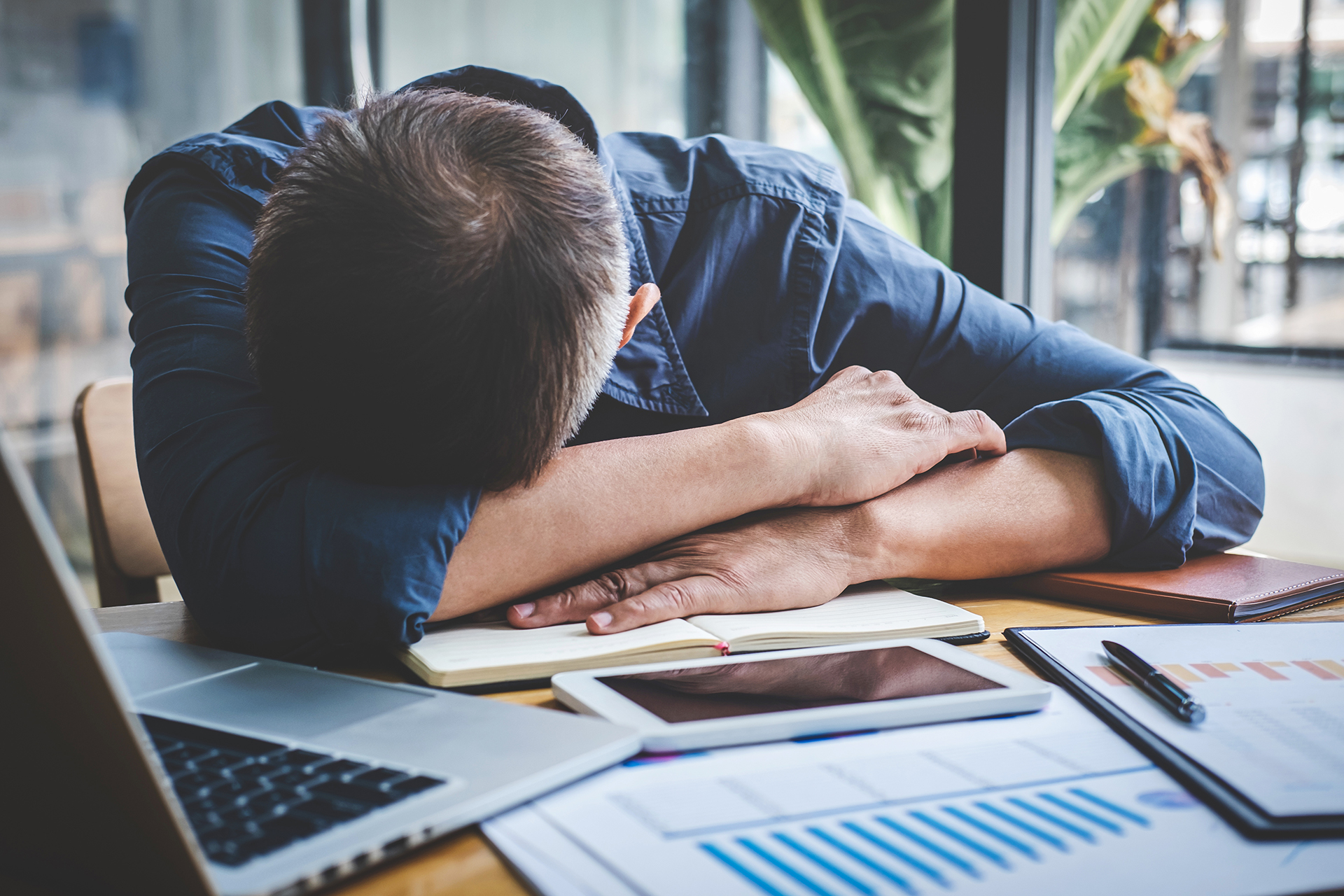
What causes daytime sleep attacks?
Suddenly, your eyes start to close – at your desk, in the middle of a conversation or even at the wheel. Daytime sleep attacks are not a normal dip in energy levels, but a warning signal from the body. But what lies behind them?
"Daytime sleep attacks are an involuntary falling asleep," explains Dr Vorster. “It’s not simply tiredness, but a sudden nodding off.” Although someone who has had enough sleep may feel tired during the day, their eyes do not close uncontrollably.
“In the vast majority of cases, the cause of daytime sleep attacks is sleep apnoea – in other words, snoring accompanied by pauses in breathing.”
Dr Vorster, sleep researcher
These night-time breathing pauses lead to many unnoticed periods of wakefulness. “Although you’ve actually slept for seven or eight hours, to the body it feels like just a single hour,” says Dr Vorster, explaining the problem.
The consequences are serious: people with untreated sleep apnoea are twice as likely to be involved in a road traffic accident. The sleep researcher makes it clear: “Daytime sleep attacks are no trivial matter.” Anyone who realises they are nodding off must stop immediately and take a power nap – anything else is life-threatening and also a criminal offence.
Other causes of daytime sleep attacks include chronic sleep deprivation, such as that caused by shift work. Rare neurological conditions, such as narcolepsy, can also cause excessive daytime sleepiness, though they affect less than one per cent of the population.
"When the brain urgently needs sleep, it shuts down briefly, like an emergency programme."
When should you take action?
Anyone who repeatedly falls asleep unintentionally should definitely visit a sleep clinic. The sooner the cause is identified, the better it can be addressed. The fact is: sudden daytime sleep attacks must always be taken very seriously.
Sleep tip from Dr Vorster
“Take sudden nod-offs seriously. Have your sleep assessed by a doctor – especially if you snore or never feel properly rested in the mornings.”
Source reference: Dr Albrecht Vorster, sleep researcher (personal conversation, 13 February 2026) Pérez-Carbonell L, Mignot E, Leschziner G, Dauvilliers Y. Understanding and approaching excessive daytime sleepiness. Lancet. 2022;400(10357):1033–1046. doi:10.1016/S0140-6736(22)01018-2